Montgo Health Systems

Day: February 26, 2026

  • Who Qualifies as a Healthcare Staffing Professional in the UAE?

    Who Qualifies as a Healthcare Staffing Professional in the UAE?

    The healthcare sector in the UAE is growing very fast. With new hospitals, clinics, and medical centers opening every year, there is a strong demand for qualified healthcare professionals. But many people often ask: Who exactly qualifies as a healthcare staffing professional in the UAE?

    In simple words, a healthcare staffing professional is someone who is legally qualified, licensed, and approved to work in the medical field in the UAE. Let’s break it down in easy terms.

    1. Doctors and Physicians

    Doctors are one of the main healthcare professionals in the UAE. This includes:

    • General Practitioners (GPs)

    • Specialists (like Cardiologists, Dermatologists, Pediatricians, etc.)

    • Surgeons

    • Consultants

    To qualify, doctors must:

    • Have a recognized medical degree

    • Complete required years of experience

    • Pass the relevant UAE licensing exam (DHA, MOH, or DOH depending on the emirate)

    • Get their professional license approved

    Without a valid license, no doctor can legally work in the UAE.

    2. Nurses

    Nurses play a very important role in hospitals and clinics. In the UAE, qualified nurses include:

    • Registered Nurses (RN)

    • Assistant Nurses

    • ICU Nurses

    • Pediatric Nurses

    • Operating Room Nurses

    To qualify, nurses must:

    • Hold a nursing diploma or degree

    • Have required clinical experience

    • Pass the licensing exam

    • Obtain a valid license from the health authority

    3. Allied Healthcare Professionals

    Allied healthcare professionals are medical workers who are not doctors or nurses but still provide important healthcare services. Examples include:

    • Pharmacists

    • Physiotherapists

    • Radiographers

    • Lab Technicians

    • Medical Laboratory Technologists

    • Dietitians

    • Occupational Therapists

    • Speech Therapists

    Each of these professionals must have proper education, relevant experience, and an approved license to work in the UAE.

    4. Healthcare Technicians and Support Staff

    Some roles support doctors and nurses in patient care. These include:

    • Dental Assistants

    • Medical Assistants

    • Anesthesia Technicians

    • Dialysis Technicians

    • Emergency Medical Technicians (EMT)

    Even for these roles, proper qualifications and licensing are required.

    5. Healthcare Staffing and Recruitment Professionals

    In another sense, a healthcare staffing professional can also mean someone who works in medical recruitment or staffing agencies. These professionals help hospitals and clinics hire doctors, nurses, and other medical staff.

    To qualify in this area, a person should:

    • Have knowledge of healthcare roles and requirements

    • Understand UAE licensing rules

    • Work with approved recruitment agencies

    • Follow UAE labor laws and healthcare regulations

    They may not provide medical treatment, but they play a key role in building strong healthcare teams.

    Licensing Authorities in the UAE

    To officially qualify as a healthcare professional, you must get approval from one of these authorities:

    • DHA (Dubai Health Authority) – for Dubai

    • DOH (Department of Health – Abu Dhabi) – for Abu Dhabi

    • MOH (Ministry of Health and Prevention) – for other emirates

    Each authority has slightly different rules, but the main requirements are education, experience, exam passing, and document verification.

    Important Requirements to Qualify

    In general, to qualify as a healthcare staffing professional in the UAE, you must:

    • Have a recognized degree or diploma

    • Meet minimum experience requirements

    • Pass the required licensing exam

    • Complete dataflow or document verification

    • Follow UAE healthcare laws

    Do all healthcare professionals need a license to work in the UAE?

    Yes, all healthcare professionals need a valid license to work in the UAE. This includes doctors, nurses, dentists, pharmacists, lab technicians, and other medical staff. You cannot legally work in any hospital, clinic, or medical center without approval from the health authority. In the UAE, there are different health authorities depending on the emirate. For example, DHA (Dubai Health Authority) is for Dubai, DOH is for Abu Dhabi, and MOH (Ministry of Health) covers other emirates like Sharjah and Ajman. You must get a license from the authority of the emirate where you plan to work.

    Conclusion

    A healthcare staffing professional in the UAE is anyone who is properly trained, qualified, and licensed to work in the healthcare sector whether they are treating patients directly or helping recruit medical staff.

    The UAE has strict rules to ensure patient safety and high medical standards. So, only those who meet all official requirements can legally work in the healthcare field..


    Faqs

    1. What does a healthcare staffing professional do?
    They recruit, screen, and place nurses, physicians, and allied health workers in hospitals, clinics, and other care settings.

    2. What types of roles do they fill?
    Common placements include RNs, LPNs, CNAs, physicians, therapists, medical assistants, and administrative healthcare staff.

    3. How do they verify qualifications?
    They check licenses, certifications, work history, references, background checks, and compliance requirements.

    4. Do they handle temporary or permanent placements?
    Both. They may arrange travel, per diem, contract, or direct hire positions depending on client needs.

    5. Who do they work with?
    Hospitals, private practices, long term care facilities, outpatient centers, and other healthcare organizations.

    6. Why use a healthcare staffing professional?
    They save time, reduce hiring risk, ensure compliance, and help maintain proper staffing levels for safe patient care.
  • How Can You Get a Medical Assistant License in the UAE?

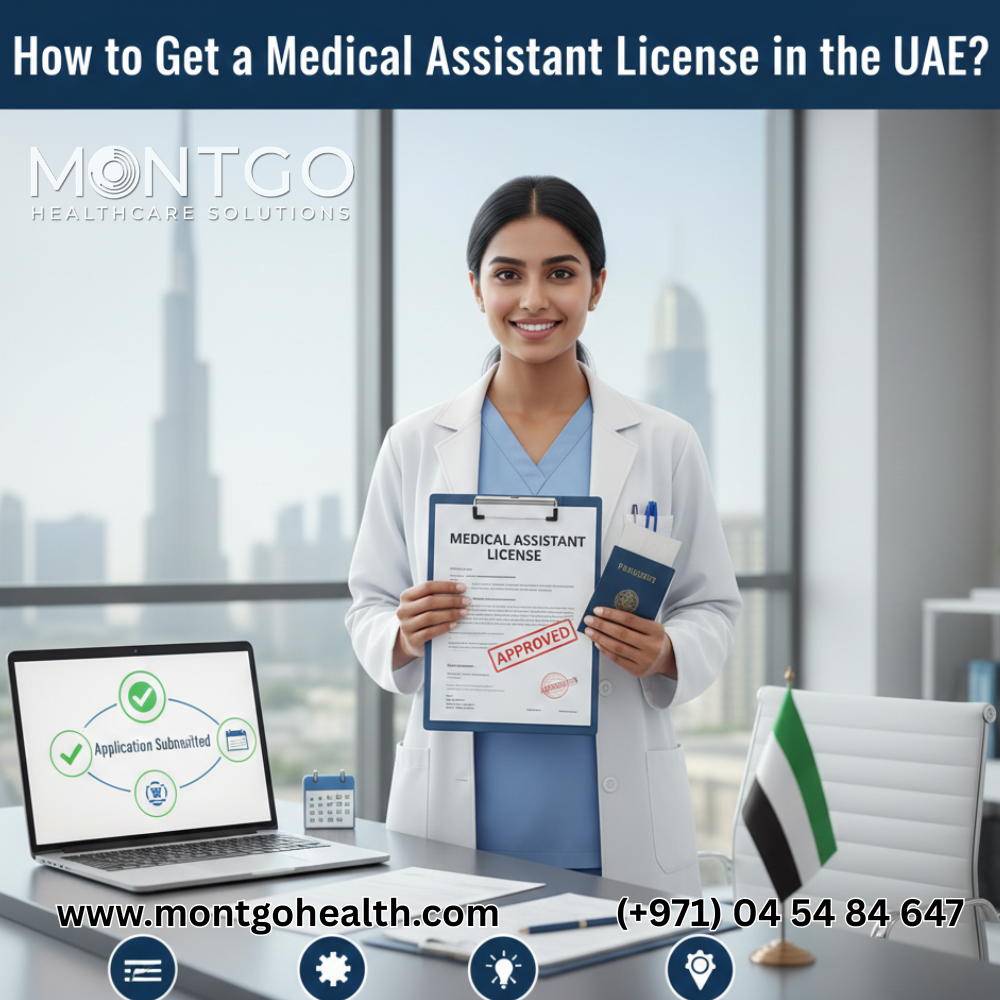
    How Can You Get a Medical Assistant License in the UAE?

    If you want to work as a Medical Assistant in the United Arab Emirates, you’ll need to get officially licensed. The rules may feel confusing at first, but don’t worry this guide explains everything in simple, friendly words.

    Before we start, here’s one thing to know:
    The UAE doesn’t call it a “Medical Assistant License.” Instead, medical assistants are usually placed under the category of Healthcare Assistants, Clinical Assistants, or Nursing Assistants depending on the emirate and the employer.

    Still, the process to get licensed is similar across the country.

    Step 1: Choose the Emirate Where You Want to Work

    Each emirate has its own medical authority:

    • Abu Dhabi → Department of Health – Abu Dhabi

    • Dubai → Dubai Health Authority

    • Other Emirates (Sharjah, Ajman, RAK, Fujairah, UAQ) → Ministry of Health and Prevention (MOHAP)

    You’ll apply for licensing through the authority of the emirate where you plan to work.

    Step 2: Make Sure You Meet the Basic Requirements

    To apply, you usually need:

    1. Educational Qualification

    • Completion of a certificate or diploma program in medical assisting, nursing assisting, or another related healthcare support field.

    2. Work Experience

    • Most authorities ask for 1–2 years of experience in a related healthcare role.

    • Recent graduates may still qualify depending on the program.

    3. Good Standing Certificate

    • A document from your previous employer or licensing body confirming you have no issues or violations.

    4. Valid Passport & Photos

    • Standard ID documents.

    Step 3: Get Your Documents Verified (Dataflow)

    The UAE uses a verification system called Dataflow.
    This step checks that your certificates and experience are real.

    You will upload:

    • Education certificate

    • Experience letters

    • Passport copy

    • Other required documents

    Dataflow will then confirm everything with your school or employer.

    Step 4: Create an Online Account With Your Health Authority

    Depending on the emirate, you will use one of these portals:

    • DOH Abu Dhabi → TAMM/DOH Licensing Portal

    • DHA Dubai → Sheryan Portal

    • MOHAP Emirates → MOHAP Licensing Portal

    You will:

    1. Create an account

    2. Upload your documents

    3. Pay the required fees

    Step 5: Pass the Licensing Exam

    Most applicants must pass the Prometric exam, which tests your basic medical knowledge.
    The exam is not very difficult and covers:

    • Patient care

    • Basic medical procedures

    • Infection control

    • Safety guidelines

    Some applicants may also need an interview depending on the emirate.

    Step 6: Get Your Eligibility Letter

    After you pass your exam and your documents are approved, you’ll receive an Eligibility Letter.

    This letter means:

    You are allowed to work as a Healthcare Assistant/Medical Assistant in the UAE.
    You can now look for a job in clinics, hospitals, or medical centers.

    Step 7: Secure a Job & Apply for Your License Card

    Once a healthcare facility hires you, they will:

    • Activate your eligibility

    • Apply for your license card

    • Link you to their facility

    After this step, you are officially a licensed Medical Assistant in the UAE.

    Conclusion

    In conclusion, getting a Medical Assistant license in the UAE is a clear, step-by-step process once you know what to do. From choosing the right emirate and preparing your education and experience documents to passing the licensing exam and securing a job, each step brings you closer to working legally and confidently in the healthcare field. With patience, careful preparation, and following the official procedures, you can achieve your goal of becoming a licensed Medical Assistant and start a rewarding career in the UAE’s growing healthcare sector.


    Faqs

    1. Who needs a medical assistant license?
    Anyone working as a medical assistant in a licensed healthcare facility must hold a valid license.

    2. What qualifications are required?
    A recognized diploma or certificate in medical assisting is usually required.

    3. Is work experience mandatory?
    Some authorities require relevant clinical experience depending on the qualification.

    4. Do I need to pass an exam?
    Yes, most regulatory authorities require passing a licensing exam.

    5. How long is the license valid?
    Validity varies by authority, commonly one to two years.

    6. Can I transfer my license to another emirate or country?
    Transfer rules differ and may require additional approvals or exams.

  • How Can Doctors Apply for an MOH Doctor License?

    How Can Doctors Apply for an MOH Doctor License?

    The United Arab Emirates has rapidly developed into a hub for world-class healthcare. With advanced hospitals, specialized clinics, and a diverse patient population, the UAE offers attractive career opportunities for medical professionals. For doctors wishing to practice outside Dubai and Abu Dhabi, the Ministry of Health and Prevention (MOHAP) governs licensing across the remaining emirates, including Sharjah, Ajman, Ras Al Khaimah, Fujairah, and Umm Al Quwain.

    Obtaining an MOH doctor license is mandatory for any physician who wants to work legally in these emirates. The licensing process ensures that all practicing doctors meet high standards of medical education, clinical experience, and professional ethics. While the process may seem complex, understanding each step can make it straightforward and manageable.

    Understanding the MOH Doctor License

    The MOH doctor license is an official credential that allows physicians to legally practice medicine in MOHAP-regulated facilities across the UAE. The license https://montgohealth.com/dha-licensing-package/is specific to the doctor’s specialty, meaning physicians are authorized to practice only in their trained field.

    Licensing through MOHAP ensures patient safety, compliance with UAE healthcare standards, and alignment with international best practices. Practicing without an MOH license is illegal and may lead to fines, legal penalties, or revocation of the right to work in the UAE.

    Step 1: Check Your Eligibility

    Before applying, doctors must confirm that they meet MOHAP’s eligibility requirements. These generally include:

    • A recognized medical degree from an accredited institution.

    • Completion of a mandatory internship or residency, depending on the level of practice.

    • Relevant clinical experience in your specialty.

    • A valid license from the physician’s home country or previous workplace.

    Specialists and consultants are often required to hold postgraduate qualifications such as board certification or fellowship training. MOHAP also evaluates the applicant’s professional background to ensure alignment with UAE healthcare standards.

    Step 2: Create an Account on MOHAP eServices

    MOHAP processes all licensing applications through its eServices portal. To start, you need to:

    1. Register a personal account using a valid email address.

    2. Access the professional licensing section.

    3. Begin your application for a medical license.

    The portal allows applicants to upload documents, track the application status, and receive notifications regarding updates or additional requirements.

    Step 3: Prepare and Submit Required Documents

    Document preparation is a critical step. Incomplete or inaccurate documents are the most common reasons for delays in MOHAP licensing. Required documents usually include:

    • Passport copy and Emirates ID (if available).

    • Recent professional photograph.

    • Medical degree certificate and transcripts.

    • Internship or residency completion certificates.

    • Postgraduate qualifications for specialists.

    • Professional experience letters.

    • Valid medical license from the home country or previous employer.

    All documents must be clear, legible, and officially attested. International degrees may require attestation from the Ministry of Foreign Affairs in your home country, followed by UAE embassy attestation.

    Step 4: Primary Source Verification (DataFlow)

    MOHAP mandates Primary Source Verification (PSV) of all professional credentials. This step ensures the authenticity of your education, experience, and previous licenses.

    Verification is typically done through DataFlow or equivalent authorized services. Processing time depends on the responsiveness of issuing institutions and may take several weeks. Any discrepancies or missing documents can delay approval, so careful preparation is crucial.

    Step 5: MOH Licensing Exam (If Required)

    Depending on the specialty and country of qualification, doctors may be required to pass the MOH licensing exam. The exam is designed to assess clinical knowledge, diagnostic skills, and professional competence.

    Exams are usually computer-based and scheduled at designated centers in the UAE. Some senior specialists or internationally recognized consultants may be exempt from this requirement, depending on their credentials. Preparing thoroughly for the exam is essential, as failing may result in a waiting period before reattempting.

    Step 6: Eligibility Confirmation

    After successful document verification and completion of any required exams, MOHAP issues an eligibility letter confirming that the doctor meets the requirements to practice in the UAE.

    The eligibility letter is an important step, allowing doctors to proceed to employment or license activation. It is not the final license itself, and practicing medicine before license activation is strictly prohibited.

    Step 7: Secure Employment

    To activate the MOH doctor license, a doctor must have a job offer from an MOHAP-approved healthcare facility. Hospitals and clinics submit activation requests on behalf of the doctor through the MOHAP portal.

    Employers provide the facility sponsorship and submit employment contracts and relevant documentation to MOHAP. Physicians cannot self-sponsor their license, so securing employment is a critical step in the process.

    Step 8: License Activation and Issuance

    Once MOHAP reviews and approves the employment details, the doctor’s license is activated. The license is issued electronically and is valid for a specific period, typically 1–3 years, depending on the professional category.

    License renewal requires proof of continuous professional development, compliance with MOHAP regulations, and evidence of ongoing practice in the licensed specialty.

    Typical Timeline

    While timelines vary depending on profession, specialty, and documentation, the MOH doctor license process generally takes:

    Step Estimated Time
    Eligibility check 1–2 weeks
    Application submission 1 week
    Document verification (DataFlow/PSV) 3–8 weeks
    Licensing exam (if required) 2–4 weeks
    Eligibility letter issuance 1–2 weeks
    Employment & license activation 1–3 weeks
    Total 8–20 weeks (approx. 2–5 months)

    International applicants often experience longer processing times due to attestation and verification steps.

    Tips for a Smooth MOH Licensing Process

    • Prepare all documents carefully and ensure attestation before submission.

    • Start primary source verification early to avoid delays.

    • Schedule and prepare for exams in advance if applicable.

    • Maintain clear communication with the healthcare employer and MOHAP.

    • Keep digital and physical copies of all documents for reference.

    Final Thoughts

    Obtaining an MOH doctor license is a structured but achievable process. While it may take several months, careful preparation, patience, and attention to detail can help doctors navigate each stage successfully.

    For physicians planning to practice in Sharjah, Ajman, Fujairah, Ras Al Khaimah, or Umm Al Quwain, MOHAP licensing is the gateway to a rewarding career in the UAE healthcare system. With a valid MOH license, doctors can contribute to a growing and dynamic healthcare environment while enjoying professional growth and international exposure.


    Faqs

    1. What is an MOH doctor license?
    It is an official license issued by the Ministry of Health and Prevention, allowing doctors to practice legally in UAE emirates under MOHAP.

    2. Who needs an MOH doctor license?
    All physicians intending to work in Sharjah, Ajman, Fujairah, Ras Al Khaimah, and Umm Al Quwain must obtain this license.

    3. How can doctors apply for an MOH license?
    Applications are submitted online through MOHAP’s eServices portal with required documents and primary source verification.

    4. Is document verification mandatory for MOH licensing?
    Yes. Credentials such as degrees, experience, and previous licenses must be verified through DataFlow or an equivalent service.

    5. Do I need to pass a licensing exam?
    Some doctors, depending on specialty and country of qualification, are required to pass the MOHAP licensing exam.

    6. Can I work in UAE without an MOH license?
    No. Practicing medicine without an MOHAP license is illegal and can result in fines, legal penalties, or deportation.

  • How Can You Get a Medical Clinic License in the UAE?

    How Can You Get a Medical Clinic License in the UAE?

    Opening a medical clinic in the UAE is a great opportunity, but the licensing process can feel confusing at first. The good news is that if you understand the steps clearly, it becomes much easier. In this blog, I’ll explain everything in simple words so you know exactly what to expect.

    1. Decide Where You Want to Open Your Clinic

    The first thing you need to decide is which emirate you want to open your medical clinic in. Each emirate has its own health authority:

    • Dubai – Dubai Health Authority (DHA)

    • Abu Dhabi – Department of Health (DOH)

    • Sharjah & other emirates – Ministry of Health and Prevention (MOHAP)

    Your clinic license will be issued by the authority of the emirate where your clinic is located.

    2. Choose the Type of Medical Clinic

    Next, you must decide what kind of clinic you want to open. For example:

    • General medical clinic

    • Dental clinic

    • Dermatology clinic

    • Physiotherapy clinic

    • Specialist or multi-specialty clinic

    This is important because the requirements, number of doctors, and equipment depend on the clinic type.

    3. Get Initial Approval

    Before doing anything else, you need initial approval from the health authority. This approval confirms that the government has no objection to you opening a clinic.

    At this stage, you usually submit:

    • Passport copies of owners

    • Proposed clinic name

    • Clinic activity details

    Once approved, you’re free to continue with the remaining steps.

    4. Rent a Suitable Clinic Space

    Now you need a physical location for your clinic. The space must meet health authority standards, such as:

    • Minimum size requirements

    • Proper layout (waiting area, consultation rooms, washrooms, etc.)

    • Easy access for patients

    The clinic location must be approved before you can continue.

    5. Submit Clinic Layout and Design

    You must submit a detailed floor plan of your clinic to the health authority. This layout shows where rooms, equipment, and facilities will be placed.

    The authority will review it to make sure it meets safety and medical standards. Sometimes, they may ask for changes.

    6. Hire Licensed Medical Professionals

    All doctors, dentists, nurses, and technicians working in your clinic must have a valid UAE medical license (DHA, DOH, or MOH).

    If they are applying from outside the UAE, they must:

    • Pass the licensing exam

    • Complete data flow verification

    • Meet experience requirements

    Without licensed staff, your clinic license cannot be approved.

    7. Arrange Medical Equipment and Insurance

    You must arrange:

    • Approved medical equipment

    • Proper waste disposal contracts

    • Medical malpractice insurance

    These are mandatory and help ensure patient safety and legal protection.

    8. Final Inspection and Approval

    Once everything is ready, the health authority will conduct a final inspection of your clinic. They will check:

    • Cleanliness and safety

    • Equipment and facilities

    • Staff licenses

    If everything meets the rules, you will receive final approval.

    9. Get Your Medical Clinic License

    After passing the inspection, your medical clinic license is issued, and you are officially allowed to start operations.

    Conclusion

    Getting a medical clinic license in the UAE may seem complex, but when you take it step by step, it becomes manageable. The key is choosing the right emirate, meeting health authority requirements, hiring licensed professionals, and following all regulations carefully. With proper planning and guidance, you can successfully open your medical clinic and start serving patients legally and confidently in the UAE.


    Faqs

    1. What does it mean for a medical clinic to be licensed?
    It means the clinic meets government health and safety standards, follows medical regulations, and is authorized to provide clinical services.

    2. Who issues a medical clinic license?
    Licenses are typically issued by a state or national health department or medical regulatory authority.

    3. How long is a clinic license valid?
    Most licenses must be renewed annually or every few years, depending on local regulations.

    4. What services can a licensed clinic provide?
    Primary care, preventive exams, vaccinations, lab testing, minor procedures, and management of chronic conditions, based on approval.

    5. What happens if a clinic operates without a license?
    It may face fines, closure, legal action, and loss of credibility.

    6. How can patients verify a clinic’s license?
    Patients can check the health department website or request proof of licensure directly from the clinic.

  • What Is Digital Health Marketing and Why Is It Important in the UAE?

    What Is Digital Health Marketing and Why Is It Important in the UAE?

    The healthcare industry, as well as how individuals search for physicians, clinics, and medical services, is rapidly evolving. Nowadays, the majority of patients look online rather than depending solely on word-of-mouth. This is where digital health marketing comes in.

    What Is Digital Health Marketing?

    Using online channels to promote healthcare services is known as digital health marketing. It facilitates online patient connections for physicians, clinics, hospitals, and wellness centers.

    This includes:

    • Websites and blogs

    • Social media (Instagram, Facebook, TikTok, LinkedIn)

    • Google search results (SEO)

    • Online ads

    • Email and WhatsApp marketing

    • Online reviews and reputation management

    Simply put, it’s about being visible where patients are already spending their time online.

    Why Digital Health Marketing Matters So Much in the UAE

    One of the world’s most technologically advanced nations is the United Arab Emirates. Nearly everyone utilizes the internet and smartphones on a daily basis. Digital marketing has therefore become crucial for healthcare providers.

    1. Patients in the UAE Search Online First

    Most people in the UAE Google things like:

    • “Best dentist near me”

    • “Dermatologist in Dubai”

    • “Hospital in Abu Dhabi”

    Even if you provide great services, patients might never find you if your clinic isn’t listed online.

    2. Highly Competitive Healthcare Market

    By creating a powerful online presence, digital marketing enables smaller clinics to compete with larger institutions.

    3. Builds Trust Before the First Visit

    Prior to making an appointment, patients want to feel secure. Credibility and trust are increased by having a quality website, active social media accounts, and favorable reviews.

    4. Reaches Expats and Medical Tourists

    People from throughout the world live in the United Arab Emirates. Before selecting a physician, a lot of medical tourists and expats look online. Healthcare providers can readily contact this varied population with the use of digital health marketing.

    5. Cost-Effective and Measurable

    Digital marketing is less expensive than traditional advertising methods like newspapers or billboards. Additionally, it enables clinics to monitor outcomes, including the number of visitors to the website or appointments made.

    Key Benefits of Digital Health Marketing

    • Increases patient awareness

    • Attracts more appointments

    • Improves clinic visibility on Google

    • Builds long-term patient relationships

    • Helps educate patients with useful content

    Is digital health marketing expensive?

    Almost any budget can be accommodated by digital health marketing, which is not necessarily costly. Your objectives and the kind of marketing you select will determine this. Social networking, Google listings, and basic internet advertisements are all successful ways for clinics and physicians to attract people, even on a tight budget. Digital marketing is typically far less expensive than traditional forms of promotion like billboards, newspapers, or TV advertisements. The fact that it is quantifiable you can see how many people called your clinic, made an appointment, or visited your website is another benefit. This way, you can spend money wisely and avoid wasting it. When done the right way, digital marketing gives good results without costing too much.

    Can small clinics benefit from digital health marketing?

    Digital health marketing may undoubtedly help tiny clinics. Online marketing makes it simple for a clinic to contact the ideal patients, regardless of its size or level of experience. Small clinics may compete with larger hospitals, gain more awareness, and establish credibility by using social media, a basic website, Google listings, and online reviews. They may contact patients directly, showcase their services, and offer beneficial health advice through digital marketing, which can result in increased appointments and enduring partnerships. In summary, it provides small clinics with a means of expansion and success without requiring substantial financial resources.

    How long does it take for health marketing to start producing results?

    Results from digital health marketing can vary. Some quick results, like more website visits or calls, can happen within a few weeks. It typically takes a few months to achieve more significant outcomes, such as raising your Google position or developing a strong online presence. Consistency is key for long-term success.

    Is patient data safe in digital health marketing?

    Yes, if clinics adhere to the right guidelines, patient data in digital marketing can be secure. In accordance with UAE laws and healthcare regulations, all information must be kept confidential and safe. Marketing should never divulge personal information without consent, and moral behavior guarantees that patient privacy is always maintained.

    Conclusion

    In the United Arab Emirates, digital health marketing is now mandatory. Trust is more important than ever, patients are online, and competition is fierce. Healthcare providers can expand their practice, attract a larger patient base, and improve accessibility to healthcare by employing digital marketing effectively.


    Faqs

    • What is digital health marketing?
      It’s the use of digital channels to promote healthcare services, apps, devices, and solutions to patients, providers, and payers.

    • How is it different from regular digital marketing?
      It must follow strict healthcare regulations, protect patient data, and communicate with accuracy and sensitivity.

    • Which channels work best?
      SEO, content marketing, paid search, social media, email, and app store optimization are common and effective.

    • Is health marketing HIPAA compliant?
      It can be, if campaigns are designed with proper data handling, consent, and secure platforms.

    • Who needs digital marketing?
      Hospitals, clinics, health tech startups, telehealth providers, pharma, and wellness brands all benefit from it.

    • How do you measure success?
      Key metrics include patient engagement, conversions, cost per acquisition, retention, and long-term health outcomes.

  • How Can You Apply for a DHA Physician License in Dubai?

    How Can You Apply for a DHA Physician License in Dubai?

    Dubai has become one of the most attractive destinations for medical professionals from around the world. With world-class hospitals, advanced healthcare infrastructure, and a diverse patient population, the city offers excellent career opportunities for physicians. However, before practicing medicine in Dubai, every doctor must obtain a professional license from the Dubai Health Authority (DHA).

    The DHA physician licensing process is structured, transparent, and strictly regulated to ensure high standards of patient care. While the process may seem complex at first, understanding each step makes it far more manageable. This guide explains how you can apply for a DHA physician license in Dubai, from eligibility to final approval.

    Understanding the DHA Physician License

    A DHA physician license is a legal requirement for any doctor who wishes to work in Dubai’s public or private healthcare sector. The license confirms that the physician meets the educational, clinical, and professional standards set by the Dubai Health Authority.

    The license is issued for a specific specialty, meaning doctors must apply under their qualified area of practice. Working without a valid DHA license is not permitted and can result in serious penalties.

    Step 1: Check Your Eligibility

    Before starting the application, it is essential to confirm that you meet DHA eligibility requirements. DHA follows the unified UAE healthcare professional qualification framework, also known as the PQR.

    Physicians must hold a recognized medical degree from an accredited institution. In addition, a completed internship is mandatory for general practitioners. Specialists and consultants must have postgraduate qualifications such as a residency, board certification, or fellowship, depending on their specialty.

    Relevant clinical experience is also required. The number of years depends on your qualification and professional title. Any gap in clinical practice may need justification or additional documentation.

    Step 2: Create a Sheryan Account

    All DHA licensing applications are processed through Sheryan, DHA’s official online portal. Applicants must create a personal account using a valid email address.

    Once registered, you can access the professional licensing section and begin your application. Sheryan allows you to upload documents, track application progress, and receive updates directly from DHA.

    It is important to ensure that all personal information entered in the system matches your official documents exactly to avoid delays.

    Step 3: Prepare Required Documents

    Document preparation is one of the most important parts of the DHA licensing process. Incomplete or incorrect documents are the most common reasons for application delays.

    Typically required documents include a passport copy, recent photograph, medical degree certificate, transcripts, internship certificate, postgraduate qualifications if applicable, experience certificates, and a valid medical license or registration from your home country or previous workplace.

    All documents must be clear, readable, and officially issued. Some documents may need to be attested, depending on your country of origin and qualification.

    Step 4: Primary Source Verification (DataFlow)

    Primary source verification, commonly known as DataFlow, is a mandatory step in the DHA licensing process. This process verifies the authenticity of your education, experience, and professional credentials directly from the issuing authorities.

    Once you submit your documents through Sheryan, you will be directed to complete the DataFlow application. Processing time varies, but it typically takes several weeks.

    It is crucial to ensure that all submitted documents are genuine and accurate. Any discrepancy or falsified information can result in application rejection or a long-term ban.

    Step 5: DHA Assessment or Exam

    Depending on your specialty, qualifications, and country of training, you may be required to pass a DHA assessment. This is usually a computer-based exam that tests clinical knowledge and professional competence.

    Some senior specialists and consultants may be exempt from the exam based on their credentials. DHA determines exam eligibility on a case-by-case basis.

    Preparing well for the assessment is important, as failing may require a waiting period before reattempting.

    Step 6: Receive Eligibility Letter

    Once DataFlow verification is completed and the assessment is passed, DHA issues an eligibility letter. This letter confirms that you are qualified to work as a physician in Dubai.

    The eligibility letter is not a work license by itself. It allows you to seek employment with a DHA-licensed healthcare facility in Dubai.

    Eligibility letters are typically valid for a limited period, so securing a job within that timeframe is essential.

    Step 7: Secure Employment in Dubai

    To activate your DHA physician license, you must have a job offer from a healthcare facility licensed by DHA. The employer plays a key role in the final licensing steps.

    Once you accept a job offer, the healthcare facility submits your license activation request through Sheryan. This includes submitting employment contracts and facility sponsorship details.

    Physicians cannot self-sponsor their DHA license. License activation must be linked to an approved healthcare employer.

    Step 8: License Activation and Issuance

    After employer submission and DHA approval, your physician license is activated. You are now legally permitted to practice medicine in Dubai within the approved specialty and facility.

    The license is usually issued electronically and must be renewed periodically. Renewal requires proof of continuous professional development and compliance with DHA regulations.

    Practicing outside your approved scope or specialty is strictly prohibited.

    Common Challenges and Tips

    Many physicians face delays due to documentation errors, mismatched names, or incomplete experience certificates. Reviewing all documents carefully before submission can save significant time.

    Starting the application early is strongly recommended, especially for international physicians. Keeping digital copies of all certificates and maintaining clear communication with DataFlow and DHA also helps avoid unnecessary complications.

    Final Thoughts

    Applying for a DHA physician license in Dubai is a structured but achievable process. With the right preparation, accurate documentation, and patience, physicians can successfully obtain licensure and begin practicing in one of the most dynamic healthcare environments in the region.

    Dubai continues to invest heavily in healthcare excellence, making it an ideal destination for qualified physicians seeking professional growth and global exposure. Understanding the DHA licensing process is the first step toward building a successful medical career in the UAE.


    Faqs

    1. What is a DHA Physician License?
    It is an official license issued by the Dubai Health Authority that permits physicians to practice legally in Dubai.

    2. Who needs a DHA Physician License?
    Any doctor who wants to work in a public or private healthcare facility in Dubai must obtain this license.

    3. How can I apply for a DHA Physician License?
    Applications are submitted online through the DHA Sheryan portal with required documents and verification.

    4. Is DataFlow mandatory for DHA licensing?
    Yes, primary source verification through DataFlow is a required step for all physician applicants.

    5. Is the DHA exam required for all doctors?
    Not always. Some specialists and consultants may be exempt based on qualifications and experience.

    6. Can I work in Dubai without a DHA Physician License?
    No, practicing medicine in Dubai without a valid DHA license is not permitted.

  • How Do You Register a Medical Device in the UAE?

    How Do You Register a Medical Device in the UAE?

    If you’re planning to sell or distribute a medical device in the UAE, you need to make sure it’s officially registered. The UAE takes medical device registration seriously to ensure safety and quality for patients. Don’t worry it may sound complicated, but we’ll break it down step by step.

    Step 1: Understand What Counts as a Medical Device

    A medical device can be anything from a simple thermometer to a high-tech surgical instrument or diagnostic machine. The UAE classifies devices based on risk from low-risk (like bandages) to high-risk (like heart pacemakers). The process of registration depends on the risk level of your device.

    Step 2: Find an Authorized Local Representative

    If your company is not based in the UAE, you’ll need a local representative or distributor. This person or company will act as your main contact with the UAE’s regulatory authority, which is the Ministry of Health and Prevention (MOHAP).

    Step 3: Prepare the Required Documents

    The UAE requires certain documents before approving a medical device. These include:

    • Company details – Your business license and registration.

    • Device details – Name, model, classification, and description.

    • Technical documents – Safety and performance data, certificates from the manufacturer, user manuals.

    • Certificates – ISO certifications, CE mark, or FDA approval (if available).

    Step 4: Submit Your Application

    Applications are submitted online through MOHAP’s Medical Device Registration System. Make sure all documents are complete and correctly filled out. Incomplete applications can delay the process.

    Step 5: Pay the Fees

    The registration process includes a fee, which varies depending on the type and risk level of your device. Once your application has been submitted, you will receive a payment request.

    Step 6: Wait for Review and Approval

    MOHAP will review your documents carefully. For some devices, they may request more information or even samples for testing. This process can take several weeks to months, depending on the device type.

    Step 7: Get Your Registration Certificate

    Once your device is approved, you’ll receive a Medical Device Registration Certificate. This certificate allows you to legally sell or distribute your device in the UAE.

    Step 8: Keep Your Registration Updated

    Medical device registration in the UAE is not permanent. You need to renew your certificate periodically and inform MOHAP about any changes in the device or company details.

    Conclusion

    Registering a medical device in the UAE might seem overwhelming at first, but breaking it down into simple steps makes it much easier. From understanding your device’s classification to submitting the right documents and getting approval from MOHAP, the process is all about being organized and thorough. With the proper preparation, a reliable local representative, and attention to detail, you can successfully bring your medical device to the UAE market and ensure it meets all safety and quality standards.


    Faqs

    1. What is medical device registration?
      Medical device registration is the official approval process that allows a device to be legally manufactured, imported, or sold in a country.

    2. Why is medical device registration required?
      It ensures patient safety, product quality, and compliance with local regulatory standards before market distribution.

    3. Who needs to register a medical device?
      Manufacturers, importers, distributors, and authorized representatives must register medical devices with the relevant authority.

    4. What documents are required for medical device registration?
      Common documents include product details, technical files, quality certificates, labeling, and manufacturer authorization.

    5. How long does medical device registration take?
      Timelines vary by country and device risk class, typically ranging from a few weeks to several months.

    6. Can consultants help with medical device registration?
      Yes, regulatory consultants help manage documentation, submissions, and approvals, reducing delays and compliance risks.

  • How Long Does It Take to Get a Healthcare Provider License?

    How Long Does It Take to Get a Healthcare Provider License?

    Healthcare in the UAE has grown rapidly over the past decade, offering world-class medical facilities and advanced patient care. With this expansion, the demand for qualified healthcare professionals—including doctors, nurses, and allied health providers—has increased significantly. If you’re planning to work in the UAE healthcare system, one of the first steps is obtaining a professional license. But how long does it actually take to get a healthcare provider license in the UAE?

    The timeline varies depending on factors such as the profession, emirate, documentation, and verification processes. Understanding each stage of licensing can help you plan effectively and avoid unnecessary delays.

    Understanding Healthcare Licensing in the UAE

    Healthcare licensing in the UAE is regulated at both federal and emirate levels. The main authorities include:

    • Dubai Health Authority (DHA): Oversees licensing for professionals working in Dubai.

    • Department of Health (DOH), Abu Dhabi: Manages healthcare licensure in Abu Dhabi.

    • Ministry of Health and Prevention (MOHAP): Responsible for the other emirates, including Sharjah, Ajman, and Fujairah.

    Each authority follows similar licensing standards but may have slightly different procedures, timelines, and requirements. Licensing ensures that healthcare providers meet strict qualifications, maintain patient safety, and uphold professional standards.

    Steps in the Licensing Process

    The process for obtaining a healthcare provider license generally involves the following steps:

    1. Eligibility Check

    Before applying, you must confirm that your educational qualifications and professional experience meet the licensing authority’s requirements. Each profession—whether physician, nurse, pharmacist, or allied health professional—has specific eligibility criteria. These may include:

    • A recognized academic degree or diploma.

    • Completion of required clinical training or internship.

    • Professional experience in your field.

    • Previous licenses from recognized institutions or countries (if applicable).

    Eligibility verification can take a few days to several weeks, depending on the completeness of your documents.

    2. Creating an Account and Online Application

    All applications are submitted through the official online portals: Sheryan for DHA, DOH’s portal for Abu Dhabi, and MOHAP’s platform for other emirates. You will need to:

    • Register a personal account.

    • Complete the application form.

    • Upload required documents, including degree certificates, transcripts, identification, and experience letters.

    At this stage, delays often occur if documents are missing, unclear, or require attestation.

    3. Document Verification and Attestation

    Document verification is a critical step. UAE authorities require primary source verification (PSV) of your educational and professional credentials. This ensures that degrees, certifications, and licenses are authentic.

    Most authorities partner with verification services such as DataFlow to validate documents directly with the issuing institutions. Verification can take:

    • 3–8 weeks for international credentials, depending on the responsiveness of your university or previous employers.

    • Shorter timeframes for documents issued locally or from well-known institutions.

    Some professions, like physicians and specialists, may also require additional credential attestation from your home country’s Ministry of Foreign Affairs.

    4. Licensing Exam (If Required)

    Certain healthcare professions require candidates to pass a professional assessment or exam. For example:

    • Physicians may need to pass the DHA, DOH, or MOHAP licensing exam.

    • Nurses and allied health professionals may have competency assessments.

    Preparation and scheduling can add 2–4 weeks or more to the process, depending on exam availability and your readiness.

    5. Eligibility Letter or Provisional Approval

    Once verification and exams (if applicable) are completed, the licensing authority issues an eligibility letter or provisional approval. This confirms that you meet the requirements to practice and allows you to proceed to employment or license activation.

    Issuance of this letter typically takes 1–2 weeks after document verification is complete.

    6. Securing Employment and License Activation

    In most cases, your license cannot be fully activated without a job offer from a licensed healthcare facility. Your employer will submit license activation requests, employment contracts, and sponsorship details to the authority.

    Activation can take 1–3 weeks, depending on the efficiency of the employer and licensing authority.

    7. Final License Issuance

    Once the activation is approved, the official healthcare provider license is issued electronically. You are now legally allowed to practice in the UAE.

    The validity of most licenses ranges from 1–3 years, with renewal requiring evidence of continuous professional development and adherence to regulatory standards.

    Typical Timelines

    While timelines vary by profession and emirate, the overall process usually takes:

    Step Estimated Time
    Eligibility check 1–2 weeks
    Online application submission 1 week
    Document verification (DataFlow/PSV) 3–8 weeks
    Licensing exam (if required) 2–4 weeks
    Eligibility letter issuance 1–2 weeks
    Employment & license activation 1–3 weeks
    Total 8–20 weeks (approx. 2–5 months)

    International candidates often face longer timelines due to document attestation and primary source verification delays.

    Factors That Can Affect the Timeline

    Several factors can speed up or delay the licensing process:

    1. Complete and accurate documents: Missing or unclear documents are the leading cause of delays.

    2. Country of qualification: Degrees from certain countries may require longer verification.

    3. Professional category: Physicians and specialists generally have longer processes than nurses or allied health providers.

    4. Exam availability: Delays in scheduling or passing assessments can extend timelines.

    5. Employer coordination: Fast and proactive submission by your healthcare employer accelerates license activation.

    Planning ahead and staying proactive at each stage can save weeks of waiting.

    Tips to Expedite Your License

    • Verify all documents before submission and ensure they are attested.

    • Start DataFlow verification early, especially if your qualifications are international.

    • Prepare for licensing exams in advance.

    • Maintain clear communication with your employer and licensing authority.

    • Keep digital copies of all documents to quickly respond to any requests.

    Final Thoughts

    Getting a healthcare provider license in the UAE is a structured but sometimes lengthy process. While the average timeline is 2–5 months, careful preparation can reduce delays. For international healthcare professionals, understanding each step—from eligibility and document verification to exam requirements and license activation—is essential for a smooth transition into the UAE healthcare system.

    With the right planning, patience, and diligence, you can successfully obtain your license and start practicing in one of the region’s most dynamic and rapidly growing healthcare markets.


    Faqs

    1. What is a healthcare provider license in the UAE?
    It is an official license that allows healthcare professionals to legally work in UAE hospitals, clinics, and other licensed facilities.

    2. Who needs a healthcare provider license in the UAE?
    All healthcare professionals, including doctors, nurses, pharmacists, and allied health workers, must obtain a license to practice legally.

    3. How long does it take to get licensed in the UAE?
    The process usually takes 2–5 months, depending on profession, document verification, exams, and employer coordination.

    4. Is document verification mandatory?
    Yes. All qualifications, experience, and licenses must be verified through primary source verification (DataFlow) or equivalent services.

    5. Do I need to pass an exam?
    Some professions, like physicians and certain specialists, require a licensing exam, while others may be exempt depending on qualifications.

    6. Can I work before my license is issued?
    No. Practicing without a valid UAE license is illegal and can result in penalties, fines, or deportation.

  • What Is Medical Device Leasing in the UAE and How Does It Work?

    What Is Medical Device Leasing in the UAE and How Does It Work?

    Starting or running a healthcare facility in the UAE can be exciting but let’s be honest, medical equipment is expensive. MRI machines, ultrasound systems, ventilators, lab devices… Buying them all at once can put a huge dent in your budget.

    That’s where medical device leasing comes in.

    So, What Is Medical Device Leasing?

    Medical device leasing means renting medical equipment instead of buying it outright. You pay a fixed amount every month (or quarter) to use the device for a specific time period.

    In simple words:
    You use the equipment, but you don’t fully own it.

    This option is becoming very popular in the UAE, especially among:

    • Hospitals

    • Clinics

    • Diagnostic centers

    • Start-ups and small healthcare practices

    Why Is Leasing Popular in the UAE?

    Healthcare in the UAE is growing fast, and technology keeps changing. Leasing helps medical providers stay updated without spending millions upfront.

    Some big reasons people prefer leasing:

    • Lower initial cost

    • Access to advanced technology

    • Less financial pressure

    • Easy upgrades

    How Does Medical Device Leasing Work in the UAE?

    Let’s break it down step by step:

    1. Choose the Equipment You Need

    First, the hospital or clinic decides what device they need like an X-ray machine, ultrasound, dialysis unit, or lab analyzer.

    2. Contact a Leasing Company

    In the UAE, many banks, financial institutions, and specialized leasing companies offer medical device leasing. They work closely with approved medical suppliers.

    3. Sign the Lease Agreement

    Once approved, both sides sign a contract. This contract clearly mentions:

    • Lease duration (usually 2–5 years)

    • Monthly or quarterly payments

    • Maintenance responsibility

    • Upgrade or buy-out options

    4. Equipment Installation & Use

    The equipment is delivered and installed at your facility. You can start using it right away while paying regular installments.

    5. End of Lease Options

    When the lease ends, you usually have three choices:

    • Return the equipment

    • Upgrade to a newer model

    • Buy the equipment at a reduced price

    What Types of Medical Devices Can Be Leased?

    In the UAE, leasing is available for many devices, such as:

    • Imaging equipment (MRI, CT, X-ray, ultrasound)

    • Laboratory machines

    • Surgical tools

    • Patient monitoring systems

    • Dental and aesthetic devices

    Key Benefits of Medical Device Leasing

    Here’s why many healthcare providers choose leasing:

    • Better cash flow – No heavy upfront payment

    • Latest technology – Easy upgrades when tech changes

    • Maintenance support – Often included in the lease

    • Tax and accounting advantages – In some cases

    • Less risk – No worry about outdated equipment

    Is Medical Device Leasing Safe in the UAE?

    Yes. The UAE has strict healthcare regulations. Leasing companies work with MOH, DHA, and DOH-approved suppliers, so safety and quality standards are maintained.

    How long is a medical device lease?

    The length of a medical device lease can vary depending on the type of device and the company providing it. Usually, leases are:

    • Short-term: 1–3 months, often for temporary or emergency use.

    • Medium-term: 6–12 months, common for devices needed while recovering or undergoing treatment.

    • Long-term: 1–3 years, for ongoing therapy or chronic conditions.

    Some companies also offer flexible or month-to-month leases, so you can return or upgrade the device if needed.

    Do leased medical devices come with maintenance?

    Yes, most leased medical devices come with maintenance and support.

    When you lease a device, the company usually takes care of:

    • Regular maintenance and inspections to make sure it’s working properly.

    • Repairs or replacement if something breaks or stops working.

    • Technical support if you have questions about using it.

    This is one of the benefits of leasing. Instead of buying you don’t have to pay extra for repairs or worry about keeping it in perfect condition.

    Conclusion

    Medical device leasing in the UAE is a smart and flexible solution for healthcare providers who want top-quality equipment without financial stress. It allows clinics and hospitals to focus on what truly matters patient care while staying modern and competitive.

    If you’re planning to open a clinic or upgrade your equipment, leasing might just be the smarter move.


    Faqs

    • What is medical device leasing?
      It allows healthcare providers to use medical equipment by paying a monthly fee instead of buying it outright.

    • What types of devices can be leased?
      Imaging systems, diagnostic tools, surgical equipment, lab devices, and many other medical technologies.

    • Who is eligible for medical device leasing?
      Hospitals, clinics, private practices, labs, and other licensed healthcare providers.

    • What are the benefits of leasing instead of buying?
      Lower upfront costs, easier budgeting, access to newer technology, and potential tax advantages.

    • How long are typical lease terms?
      Lease terms usually range from 12 to 60 months, depending on the device and provider needs.

    • Can I upgrade equipment during the lease?
      Many leasing programs allow upgrades or replacements, depending on the agreement terms.

  • What Does It Take to Become a Licensed Physician Assistant?

    What Does It Take to Become a Licensed Physician Assistant?

    The role of a Physician Assistant, often called a PA, is gaining recognition across the UAE healthcare system. As the country continues to expand its hospitals, clinics, and specialty care centers, the demand for skilled healthcare professionals who can support physicians is growing steadily. For many healthcare graduates and professionals, becoming a licensed Physician Assistant offers a rewarding career path with strong clinical involvement, job stability, and long-term growth.

    If you are considering this profession in the UAE, it is important to understand the education requirements, licensing process, and professional expectations involved.

    Understanding the Role of a Physician Assistant

    A Physician Assistant is a medically trained professional who works under the supervision of a licensed physician. In the UAE, PAs are involved in patient assessment, taking medical histories, conducting physical examinations, ordering diagnostic tests, assisting in procedures, and participating in treatment planning. While they do not practice independently, their role is vital in improving patient access to care and supporting efficient clinical workflows.

    PAs work in hospitals, outpatient clinics, specialty centers, and sometimes in emergency or surgical departments, depending on their training and scope of practice.

    Educational Requirements

    The first and most critical step toward becoming a licensed Physician Assistant in the UAE is obtaining the appropriate education.

    Most regulatory authorities in the UAE require candidates to hold at least a bachelor’s degree in Physician Assistant studies or a related medical field. Many employers and licensing bodies prefer candidates with a master’s degree in Physician Assistant studies from a recognized institution.

    The educational program should include both academic coursework and supervised clinical training. Core subjects typically cover anatomy, physiology, pathology, pharmacology, clinical medicine, and ethics. Clinical rotations usually involve exposure to internal medicine, surgery, pediatrics, emergency medicine, and family practice.

    Degrees earned outside the UAE are generally accepted, provided they are from accredited institutions and meet the equivalency standards set by UAE authorities.

    Clinical Experience and Training

    In addition to formal education, clinical experience plays a major role in eligibility for licensure. Most licensing authorities in the UAE require candidates to complete a specified period of supervised clinical training as part of their academic program.

    For internationally trained candidates, post-graduation clinical experience may be required, especially if there is a gap between graduation and application for licensure. Hands-on experience helps demonstrate clinical competence and familiarity with patient care standards.

    Maintaining detailed records of training, internships, and clinical rotations is essential, as these documents are often requested during the licensing process.

    Licensing Authorities in the UAE

    Healthcare professionals in the UAE are regulated by different authorities depending on the emirate where they intend to work.

    In Abu Dhabi, licensing is handled by the Department of Health (DOH). In Dubai, the Dubai Health Authority (DHA) oversees professional licensing. Other emirates fall under the Ministry of Health and Prevention (MOHAP).

    Each authority has its own set of guidelines, but the overall requirements are similar. Applicants must meet education and experience criteria, pass relevant assessments if required, and submit verified documentation.

    Credential Verification and Assessment

    One of the most important steps in the licensing process is credential verification. This includes verification of academic degrees, transcripts, professional licenses from other countries, and work experience.

    The UAE uses primary source verification systems to ensure that all documents are authentic. This process can take time, so early preparation is strongly recommended.

    Some authorities may also require candidates to pass an assessment or evaluation to confirm clinical knowledge and professional readiness. The format and necessity of assessments can vary depending on background and training.

    English Language Proficiency

    English is the primary working language in most healthcare settings in the UAE. Physician Assistants must be able to communicate clearly with physicians, nurses, and patients.

    While not always mandatory, some employers or licensing bodies may request proof of English language proficiency, especially for candidates educated in non-English programs. Strong communication skills are essential for patient safety and effective teamwork.

    Professional Scope and Supervision

    Once licensed, Physician Assistants in the UAE must practice within the approved scope defined by the regulatory authority and under physician supervision. The supervising physician is responsible for overseeing clinical decisions and ensuring patient safety.

    The scope of practice may differ slightly between emirates and healthcare facilities. Some settings allow PAs to perform advanced procedures, while others focus more on routine patient care and documentation.

    Understanding and respecting these boundaries is essential for maintaining licensure and professional credibility.

    Employment Opportunities and Career Growth

    The UAE offers strong employment opportunities for licensed Physician Assistants, particularly in private hospitals, multispecialty clinics, and government healthcare institutions.

    With experience, PAs may move into specialized clinical areas, leadership roles, or education and training positions. Continuous professional development is encouraged, and many employers support ongoing education and certification.

    As the healthcare system continues to evolve, the role of the Physician Assistant is expected to become more established and widely utilized.

    Ethical and Professional Responsibilities

    Licensed Physician Assistants in the UAE are expected to adhere to high ethical standards and professional conduct. This includes patient confidentiality, informed consent, cultural sensitivity, and compliance with healthcare regulations.

    Any violation of professional standards can result in disciplinary action, including suspension or revocation of licensure. Maintaining professionalism at all times is critical to long-term career success.

    Final Thoughts

    Becoming a licensed Physician Assistant in the UAE requires dedication, proper education, clinical training, and a clear understanding of the licensing process. While the journey involves multiple steps, it leads to a respected and impactful healthcare career.

    For those passionate about patient care and interested in working closely with physicians, the Physician Assistant profession offers a meaningful opportunity to contribute to the UAE’s growing healthcare sector. With careful planning and commitment, achieving licensure and building a successful career as a Physician Assistant in the UAE is an attainable goal.


    Faqs

    1. What is a Licensed Physician Assistant?
    A Licensed Physician Assistant is a trained healthcare professional who works under a physician’s supervision to assess patients, assist in diagnosis, and support treatment.

    2. Is the Physician Assistant profession recognized in the UAE?
    Yes, the profession is recognized and regulated by UAE health authorities such as DHA, DOH, and MOHAP, depending on the emirate.

    3. What qualification is required to become a Licensed Physician Assistant in the UAE?
    Applicants must hold a recognized bachelor’s or master’s degree in Physician Assistant studies or a related medical field.

    4. Which authority issues the Physician Assistant license in the UAE?
    Licensing is issued by DHA in Dubai, DOH in Abu Dhabi, and MOHAP in other emirates.

    5. Can a Physician Assistant work independently in the UAE?
    No, Physician Assistants must work under the supervision of a licensed physician as per UAE regulations.

    6. Where can Licensed Physician Assistants work in the UAE?
    They can work in hospitals, clinics, specialty medical centers, and other licensed healthcare facilities across the UAE.